July 2026
BLOG POST
Why we invested in THEKER
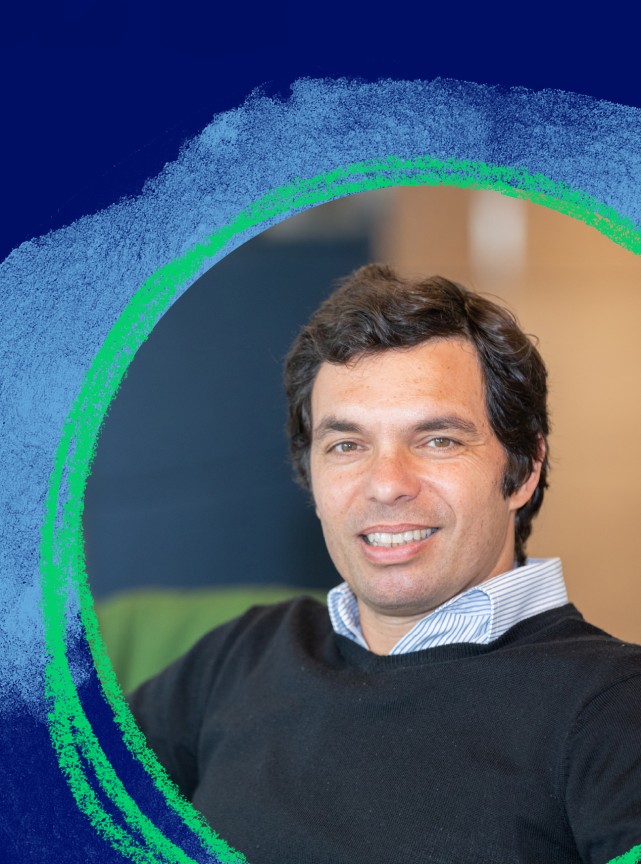
by Miguel Bagulho
Physical AI’s Growing Role in Industrial Automation
For decades, industrial robotics has been defined by powerful but rigid machines. Traditional robots excel in repetitive, highly structured environments, but they are expensive to reconfigure and difficult to deploy in the dynamic, messy reality of modern industrial operations. Products change, packaging varies, workflows evolve, and edge cases quickly erode the economics of conventional automation.
At the same time, manufacturers, logistics operators and retailers face structural labour shortages, rising labour costs and increasing pressure to improve productivity without adding operational complexity. Automation is no longer simply a cost-saving initiative—it has become a strategic necessity.
Artificial intelligence is changing this equation. Advances in computer vision, foundation models, reinforcement learning and edge AI are enabling a new generation of robots capable of perceiving, reasoning and adapting to changing environments instead of executing pre-programmed instructions. We believe the industry is moving from deterministic automation towards Physical AI: intelligent machines that continuously learn and improve inside real production environments. While a lot of the recent attention has focused on humanoid robots, we view them as only one potential form factor within a much broader shift towards AI-native robotics. The long-term opportunity lies not in the shape of the robot, but in its ability to operate autonomously and adapt reliably in real-world industrial settings.
This transition creates one of the most compelling opportunities in industrial technology today. As robotics becomes more flexible and easier to deploy, entirely new applications become economically viable across manufacturing, logistics and retail.
Why THEKER Stood Out
It was this structural shift that first attracted us to THEKER. Founded in Barcelona by robotics engineers Carla Gómez Cano and Jiaqiang Ye Zhu, the company is building AI-native generalist robots designed to operate in real industrial environments rather than controlled laboratory settings.
We built our investment case around four core pillars:
- A structural market transition towards AI-native industrial robotics.
- A differentiated full-stack product designed around adaptability rather than rigid automation.
- Early commercial validation through real industrial deployments.
- An exceptional founding team with the the ambition to build a European category leader.
A Market at an Inflection Point
The robotics market is becoming one of the most dynamic areas within AI. Rather than viewing robots as fixed pieces of machinery, industrial customers increasingly expect systems that can adapt to operational variability without extensive reprogramming. We believe this trend will reshape industrial automation over the coming decade.
Proof Through Deployment
Perhaps the strongest validation comes from THEKER’s ability to move beyond research into live production.
Publicly announced collaborations with companies including Inditex and Paack demonstrate that the company’s technology is already operating inside demanding industrial environments, providing valuable operational feedback while creating trust with future customers.
We were particularly attracted by THEKER’s vertically integrated approach. Rather than relying exclusively on third-party hardware, the company develops key hardware components, including its own electronics and end-effectors, alongside its AI software stack. This tight integration shortens learning and deployment cycles, enables faster iteration from customer feedback to product improvements, and ultimately results in a more reliable and higher-performing solution in production. We believe this ability to optimise both hardware and software together creates a durable advantage as industrial robotics increasingly depends on rapid real-world learning.
Competition is intensifying, with both established automation companies and AI-native startups investing heavily in intelligent robotics. We believe, however, that long-term leadership will depend less on individual AI models and more on the ability to repeatedly deploy reliable systems, integrate seamlessly into customer operations and continuously improve performance through real-world data.
Backing the Right Founders
The founding team is central to our conviction. Carla Gómez Cano and Jiaqiang Ye Zhu combine deep expertise in robotics and AI with a long-term vision of building an industrial platform rather than a point solution. Meeting Carla and Jiaqiang in Barcelona allowed us to see beyond the technology and understand the scale of their ambition.
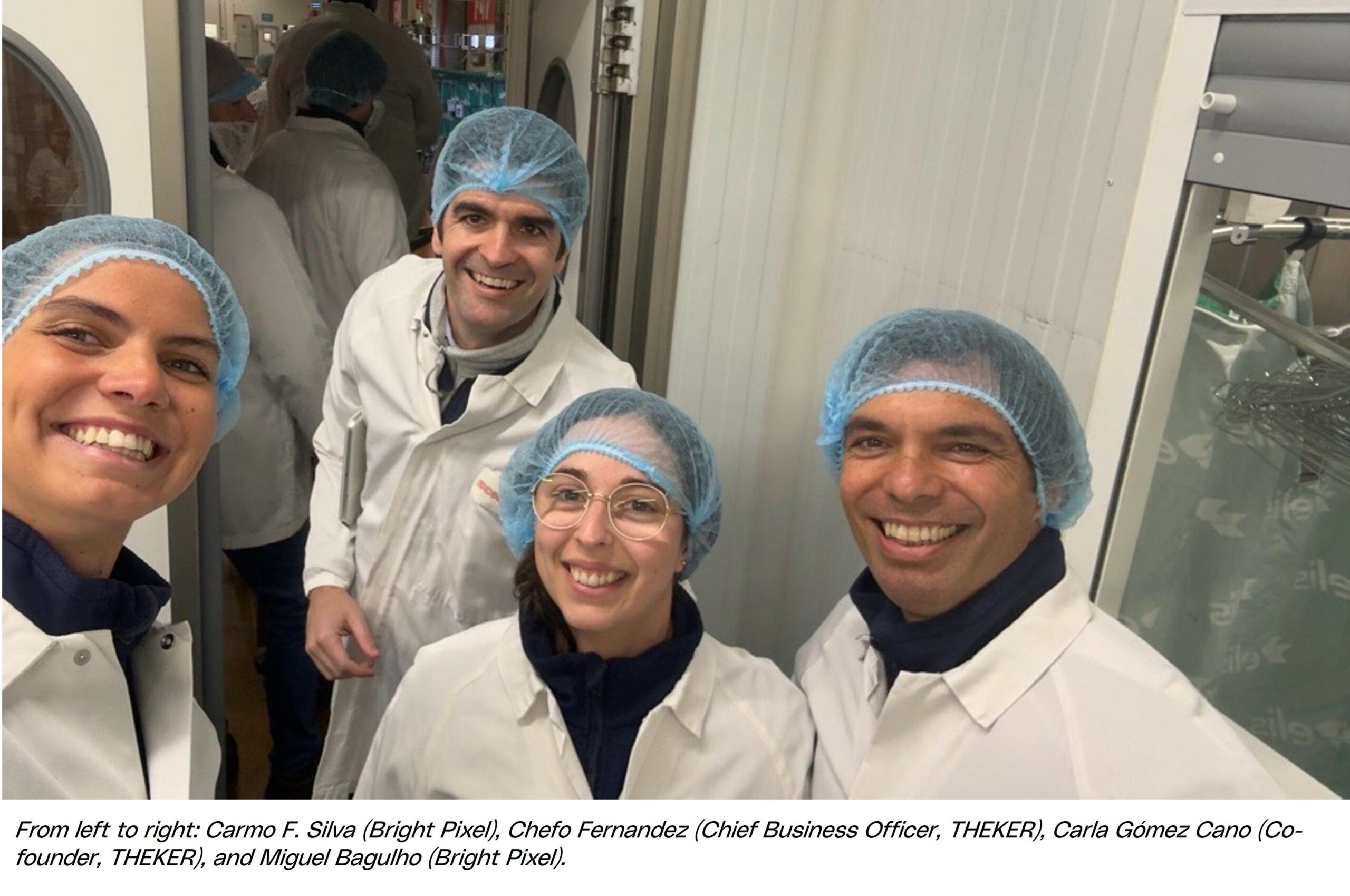
They are building a new generation of AI-native industrial robotics. That vision, combined with their technical depth and clarity of execution, left a strong impression on us from the outset. On the other hand, during the team’s visit to Sonae’s distribution centres, we quickly realised we shared the same language when discussing industrial automation and the future of Physical AI. The discussions naturally moved beyond today’s product towards the breadth of future applications that could be unlocked across different retail and logistics environments. It reinforced our view that Bright Pixel could contribute not only as an investor, but also as a partner capable of helping THEKER explore and validate new use cases.
Strong Validation, Bigger Opportunity
The quality of the investor syndicate reinforces this view. THEKER’s Series A was led by CRV with participation from Samsung, LVMH, Cathay Innovation and existing investors including Inditex, Kibo Ventures and Kfund. The breadth of support across leading venture capital firms, strategic corporates and industrial partners represents meaningful external validation of the company’s vision.
Overall, we believe THEKER is addressing one of the defining technology shifts of the next decade. As Physical AI brings intelligence into industrial operations, the companies capable of combining advanced AI with reliable real-world deployment have the potential to redefine automation.
THEKER has not yet proven it will become one of those winners, but we believe it has all the ingredients to emerge as one of Europe’s defining industrial AI companies.